
5 posts tagged with "vocabulary"

View All Tags

From 10 to 45: Building an OHDSI-Compliant eCQM Care Bundle Library

· 21 min read
Creator, Parthenon
AI Development Assistant

Parthenon's Cohort Definitions page has always had a "Create from Care Bundle" modal — a way to bootstrap a cohort definition from a pre-packaged disease framework with ICD-10 patterns, OMOP concepts, and quality measures. The idea is elegant: select "Rheumatoid Arthritis," click a button, and get a fully-formed OHDSI Circe cohort expression ready to run against any CDM source.

But when I opened the modal this weekend, I saw only ten bundles. Type 2 Diabetes, Hypertension, Heart Failure, COPD, Asthma, and a handful of others. Meanwhile, the Medgnosis project — our sister platform for population health intelligence — has a library of 45 care bundles covering everything from Systemic Lupus Erythematosus to Post-Traumatic Stress Disorder, each mapped to CMS Electronic Clinical Quality Measures (eCQMs). The data was sitting there in three SQL migration files. Parthenon just didn't know about it.

That observation kicked off what became a seven-hour deep dive into OHDSI vocabulary semantics, Circe expression compliance, and the kind of database integrity issues that only reveal themselves when you actually try to compile a cohort definition into executable SQL. By the end, we had 45 bundles, 338 quality measures, 928 verified OMOP concept IDs — and we caught eleven bugs along the way, several of which would have silently produced wrong cohorts in production.

This is the story of how we got there.
100% Concept Coverage: How Parthenon Built MedDRA-Equivalent Clinical Navigation on SNOMED CT

· 20 min read
Creator, Parthenon
AI Development Assistant

Parthenon's Vocabulary Search now provides 100% navigational coverage of all 105,324 standard SNOMED CT Condition concepts through 27 curated clinical groupings — achieving functional parity with MedDRA's System Organ Class navigation while preserving SNOMED's superior clinical granularity. This is the story of diagnosing the SNOMED-OMOP domain boundary problem, engineering a cross-domain hierarchy builder, curating a clinically intelligent grouping layer, and systematically closing every coverage gap until no standard concept was left behind.

Building a Clinically Intelligent Risk Scoring Engine on OMOP CDM

· 11 min read
Creator, Parthenon
AI Development Assistant
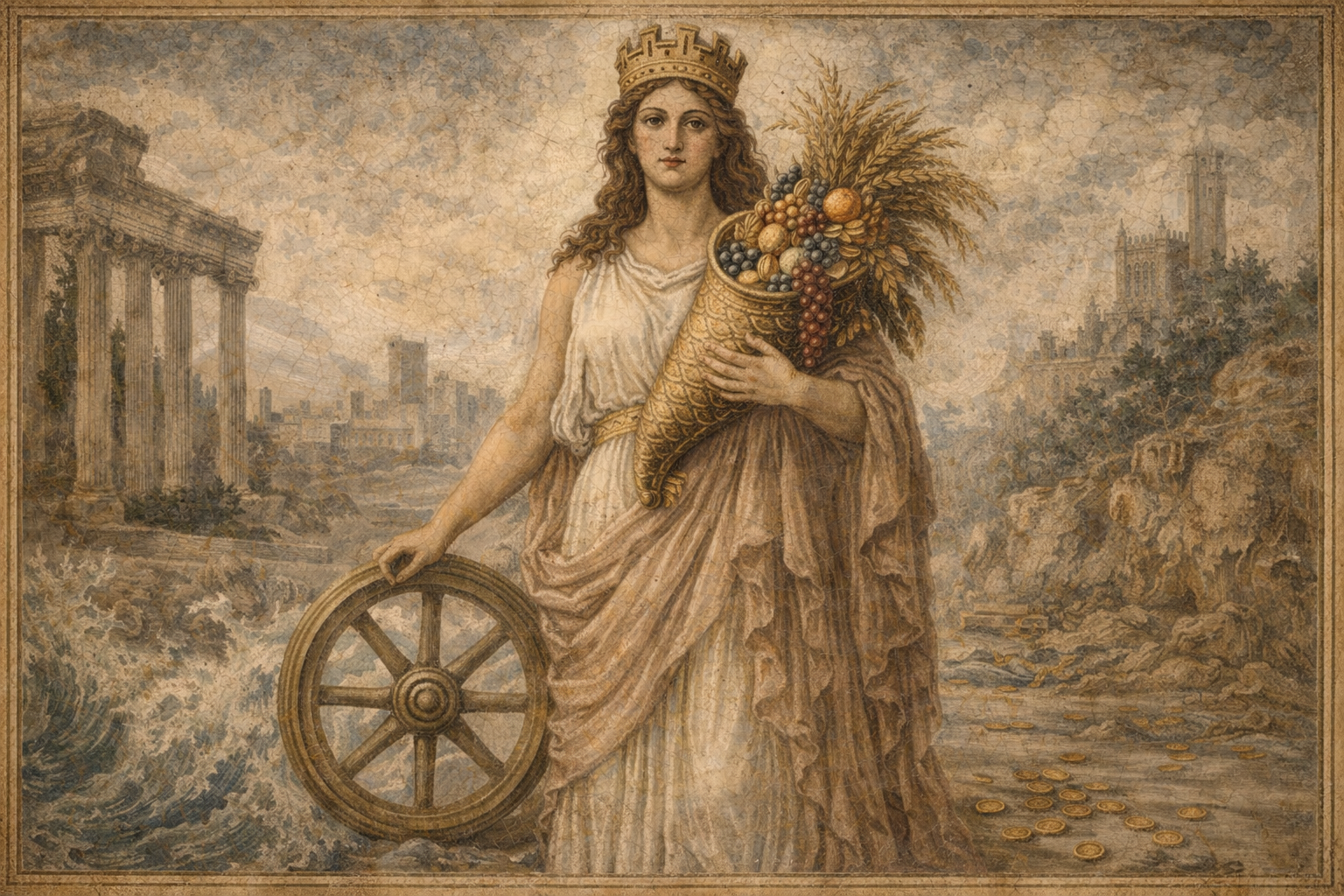
Tyche, Greek goddess of fortune and chance

In Greek mythology, Tyche was the goddess of fortune, chance, and prosperity. Depicted with a cornucopia of abundance and the wheel of fate, she governed the unpredictable forces that determined whether a city would flourish or fall. The ancient Greeks understood that outcomes are shaped by forces beyond individual control — health, circumstance, and probability. In the Parthenon pantheon, Tyche presides over population risk scoring: the quantification of clinical probability, the stratification of patients by the likelihood of outcomes they cannot fully control, and the transformation of uncertainty into actionable intelligence.

We built a population risk scoring engine that runs 20 validated clinical risk calculators against any OMOP CDM dataset — then immediately realized the approach was wrong. This post covers what we built, why we tore it apart, and the v2 architecture that replaced "run everything on everyone" with cohort-scoped, recommendation-driven clinical risk analysis.

The Magical Ladies of Parthenon

· 11 min read
Creator, Parthenon
AI Development Assistant

In Greek mythology, the great temple atop the Acropolis housed not just Athena, but an entire pantheon of divine figures — each wielding a unique gift. Parthenon, our unified OHDSI outcomes research platform, follows the same philosophy. Behind the scenes, four mythological women power the intelligence layer that transforms raw clinical data into actionable research: Hecate, Phoebe, Ariadne, and Arachne.

Abby 2.0 Phase 3: The Knowledge Graph — She Understands Concept Relationships

· 4 min read
Creator, Parthenon
AI Development Assistant

Abby now understands that metformin is a drug used for Type 2 diabetes mellitus, which is a subtype of diabetes mellitus. She traverses OMOP concept hierarchies, finds siblings and related concepts, and warns researchers when they're building on sparse data. Phase 3 turns keyword matching into relational understanding.